Large-Scale Art Plagiarism by AI
I’ve been fascinated with AI since it started becoming more of a thing in 2019. AI tools were coming out gradually back then, and I don’t think many people, including myself, knew what a massive phenomena it would be in just a few short years. When AI comes up in conversation, I usually warn people , “Don’t get me started!”. Where do we begin? We can talk about discerning between AI and reality, or we could debate the impacts on the environment, education, the social landscape, or any number of other areas of our lives. Or we could address more philosophical questions such as AI and consciousness or potential existential threats. The topics are endless because AI can touch all facets of our world. Today, my focus will be fairly narrow as I share my thoughts around AI being used to create what I call “AI regenerations”. While I spoke a bit on this in an old post called “You Can’t Identify AI Images as Well as You Think”, I wanted to dive into this particular type of plagiarism, with an analysis on what this means for artists of all types, not just photographers like myself.
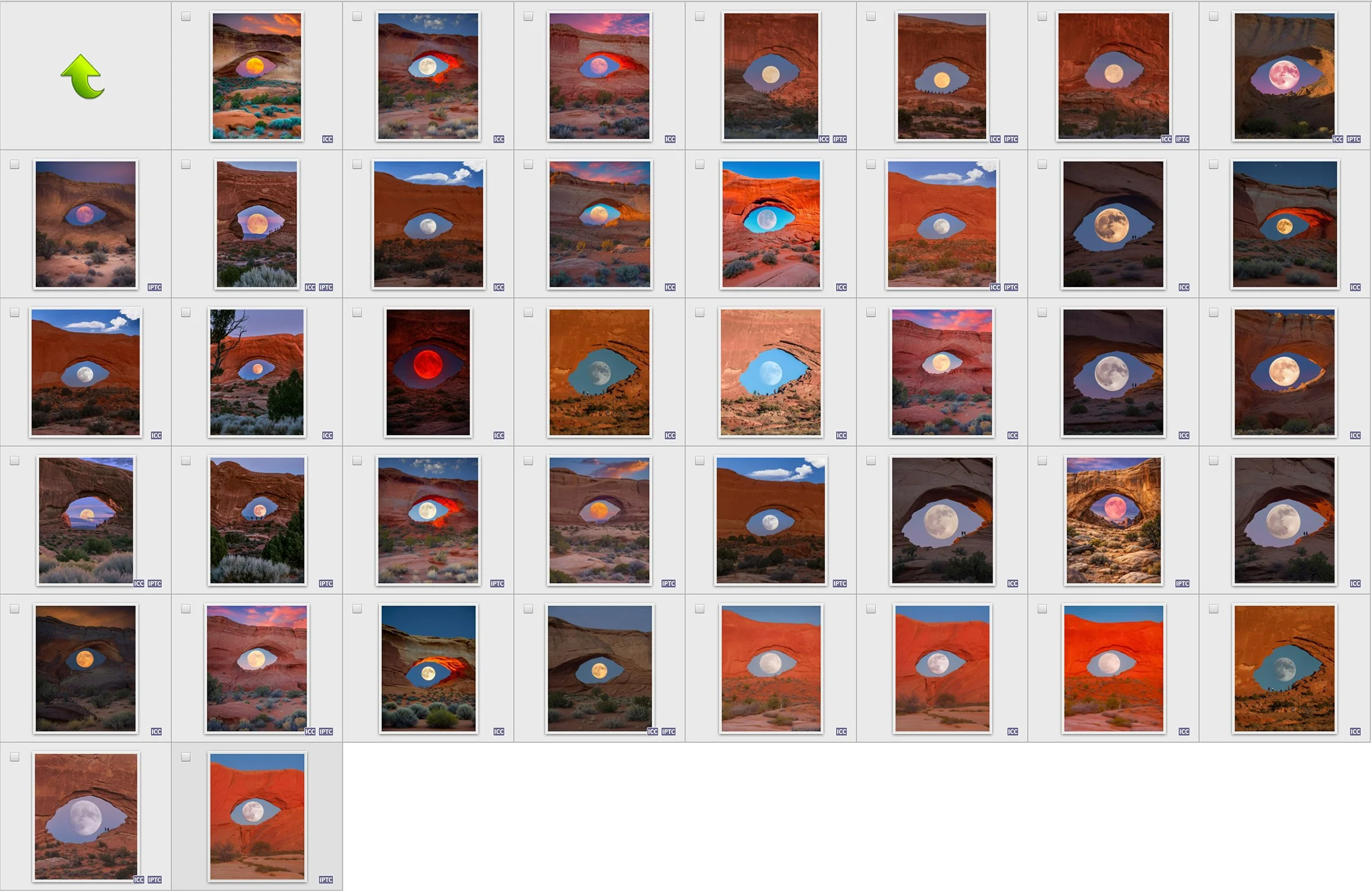
The AI regenerations of my photo that I compiled in a flash cut video to demonstrate what I’m writing about today. None of them were created by me, but they copy my work. I found them mostly on Facebook pages that share nature and travel images. Even though some of them may look like duplicates, I assure you that they are all unique, and this is not even all of them.
AI Plagiarism is Being Done on a Very Large Scale
I recently created a video showing over 40 AI versions of a photo of mine. “Moon Eye” is still my most popular photo, and after going viral in 2020, it was featured by multiple popular websites and news outlets, including an article on the largest independent photography website, Petapixel, and it also became a NASA’s Astronomy Photo of the Day. I shared the story behind the photo in an earlier blog post for anybody that wants to learn about the planning and execution of the shot. The flash cut video starts with that original photo, but then shows the dozens of other images that were very similar but not created by me. So where did they all come from then? They were mostly found on Facebook pages that post nature or travel images, and which consist of an increasing share of these AI copies that I’m pointing out here. Nobody is asking for permission to share these images that are often nearly exact copies, and credit is rarely given to the original artists. While there’s no way of knowing with 100% certainty that a specific photo was used as reference for any particular AI image without confirmation from someone that created the post, I’m familiar enough with my own work as well as others that have captured the moon in the arch to feel very confident that all the images shown in the video either used my work, or a copy of it. I found some of them through friends or followers sending me a message along the lines of, “I saw your photo on this page and they didn’t give you credit”. Then I’d take a look and find that it’s not actually my photo, but an AI regeneration. Also, since ‘the algorithm’ knows I like moon photography, my Facebook feed has given me several of the images over the past few years, and I started saving them whenever they showed up. Additionally, I searched Facebook for “Moon Eye”, and located several that way since that is commonly used in the caption. I came across dozens of other images that I’m also quite sure used my photo for reference, but had enough differences that I decided to exclude them from the video. Having seen so many versions that so closely resembled “Moon Eye”, I have to wonder how many more are out there. 100? 1,000? I don’t think I’ll ever know, and that number continues to grow, along with the pages that create and distribute this AI plagiarism.
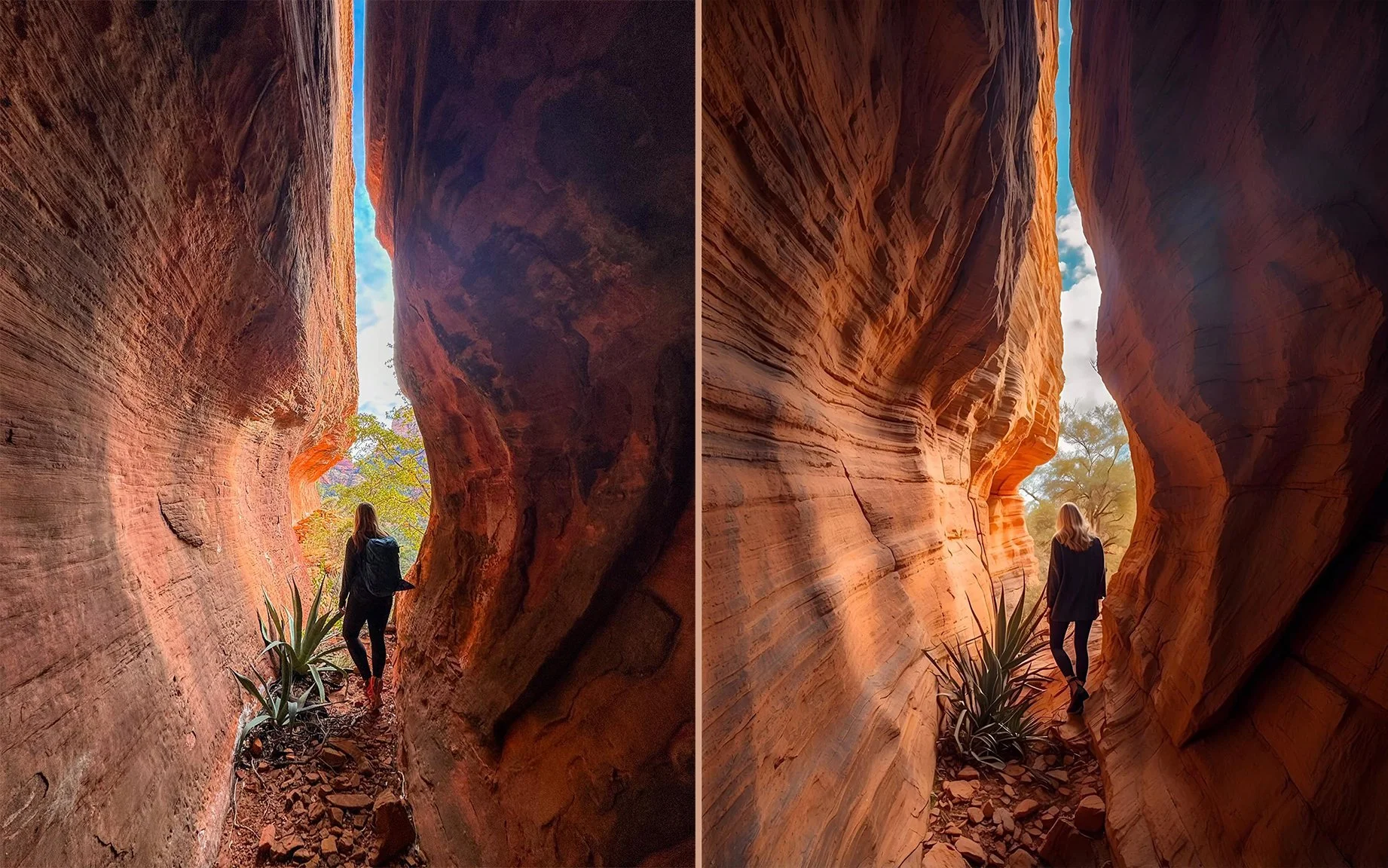
On the left, an original photo by @ashley.goes.hiking, and on the right, an AI copy shared by a third party. It might be easy to spot differences when compared side-to-side, but most casual viewers likely wouldn’t notice if they came across the images separately. AI copies can range from having very subtle differences to major variations.
In my earlier write up about identifying AI images, I showed examples from four different photographers to demonstrate the type of plagiarism we’re looking at. Sometimes, the process introduces minor variations and it can be almost indistinguishable from the original, and other times the differences are more drastic. I find the scale at which theft from artists is taking place in this way to be discouraging. When seeing these regenerations, you might picture someone sitting behind a computer, searching for an image to copy, using AI to make a new version of it, and then sharing that copy on social media. This might take a matter of minutes, but the reality is often very different from that, and far worse. Imagine someone setting up a “bot” or automated process that does all of that on its own, with no human needed after the initial setup. The automation is likely also done at least in part using AI tools. So it could be someone using a prompt looking something like this: ‘Every 15 minutes, search the web and find a photo that has been known to be viral, and create a new version. Post that new version to my Facebook page with a relevant caption”. I’ve come across Facebook pages that seem to do this, as a new image is being posted every 15 minutes on the dot, 24\7. Compare that constant posting of hundreds of images every week that are essentially guaranteed to go viral, to the humble human artist - for example, I’m personally lucky if I post on my social media a few times a week, and these are not posts that go viral. Sometimes the photos took weeks or months of planning, as well as an expedition and multiple people to execute the photo. It’s sad that artists spend years honing their craft, and sometimes hours upon hours creating a single piece, while people that haven’t practiced at all steal from those artists and extract benefit from it. The pages doing this are likely doing it with the goal of tapping into at least one of the ways attention can be monetized on Facebook and Instagram. That deserves an entire blog post on its own, but I’ll just say that it really makes me wonder how humans will be able to “compete”. It’s not fun to realize that these AI copies of my work have likely made a whole lot more money for other people who stole it than I have made from the original photo. At the very least, it definitely seems that these AI versions have reached more eyes than my original work. No art medium is immune to this type of AI plagiarism, since any and all types of art make it onto the internet in the form of a picture. For example, below is an AI regeneration of a photo of artist Jon Foreman with one of his land art pieces.
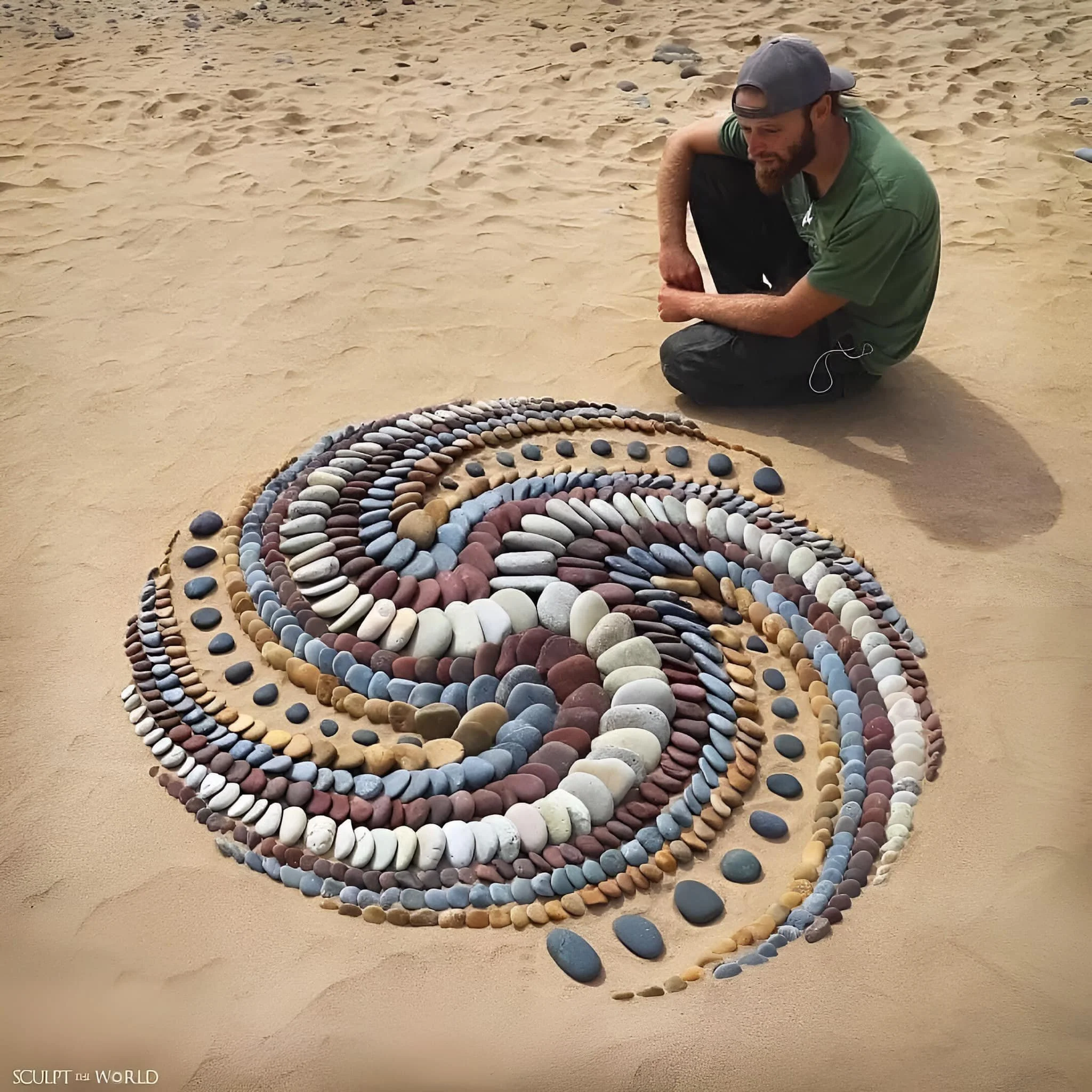
No art medium is immune to this type of plagiarism, since all it takes is a photo of the art to exist on the internet before new versions can be created using AI. Could you tell this image of Land artist Jon Foreman (@sculpttheworld) with his stone work is AI? The photo that it’s based off of is nearly identical.
How Can I find Out if my Work is Being Copied by AI?
Unfortunately, there's not really a good way to be able to automatically detect if any of your work is being used in this way. If you’ve had any work that’s gone viral or even ‘semi-viral’, you might dedicate a bit of time to scrolling on Facebook pages where these copies are likely to be found. This is best done on a computer since you’ll have a wider grid for the gallery and can few dozens of photos at the same time. For example, for landscape and nature photographers like myself, here are a few pages that are mostly posting AI copies:
Feel the Nature, Miracle of Nature, Art of The Sun, Best Destinations to Travel, Art of Nature
Regardless of your niche, you can likely find Facebook pages that are doing this. Whether you crochet or draw comics, you could do a search on Facebook using terms that might bring you to relevant pages. You’ll be looking for results in the “Pages” category, not “Groups”. Of course, some pages will be mostly non-AI content, so I recommend examining several of the images at first to see if you can determine if the page is largely sharing real photos or AI images. Also, you may already get content from these AI pages in your feed, and if you go to those pages, other content from similar pages will show up more for you. Of course, be aware that this would be a negative side effect if you don’t want more AI content in your feed. Keep in mind that even if you happen to come across something that you believe copies your work, it’s not always the case that the generated image is so similar that it removes any doubt and therefore could be considered evidence of copying. In some instances, captions are also copied along with the image though, so of course that would be a very useful indicator. Aside from doing this type of manual searching of Facebook pages, the only other possibility would be to use a reverse image search engine such as Google’s, which can find exact matches but also visually similar instances. I haven’t experimented much with that, but so far I’m not very confident in how well it’s pulling from social media, but it is another option to try.
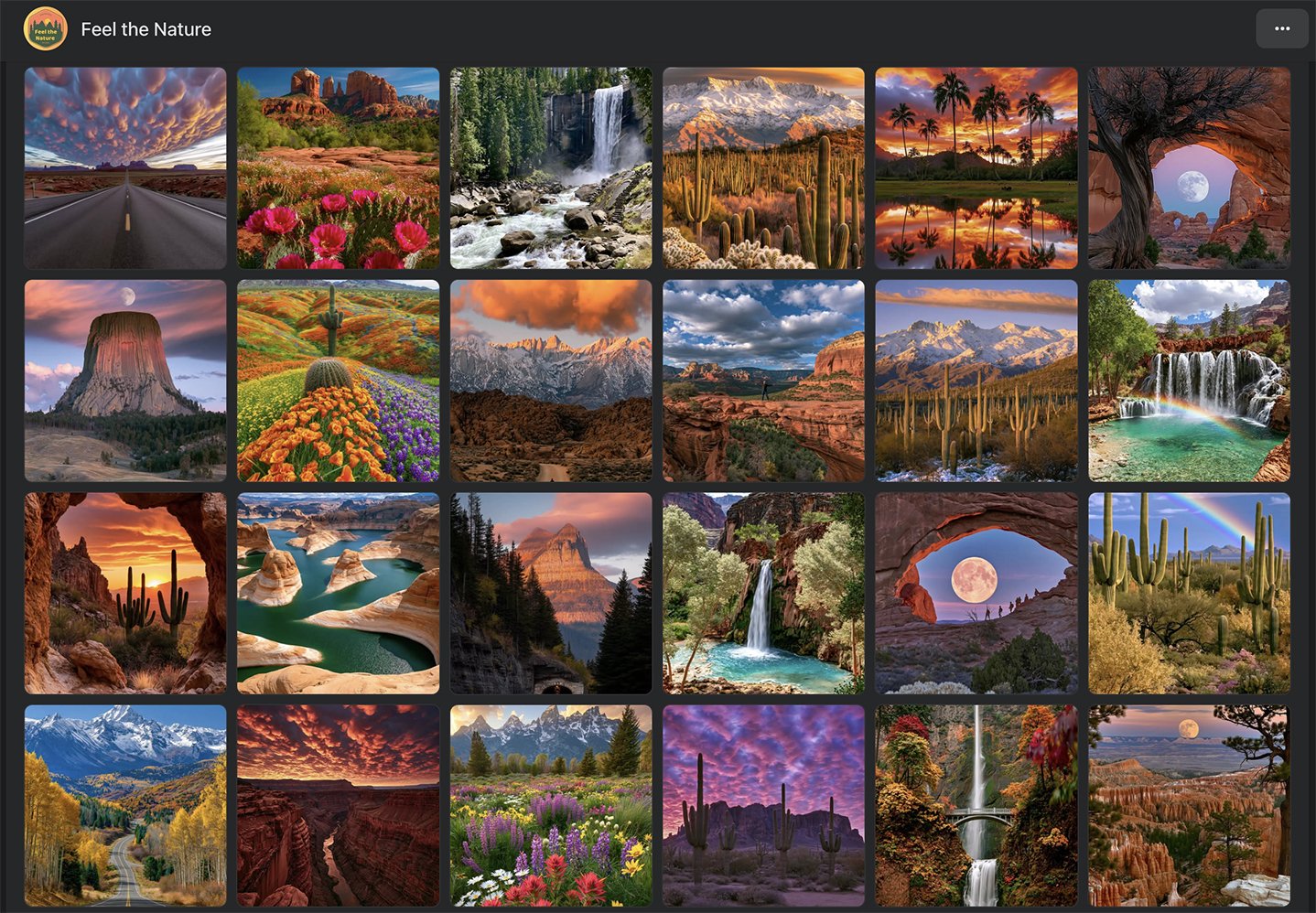
The Facebook page Feel the Nature is one of many that constantly shares AI images that are often the regenerations I’m talking about. If you take these types of nature photos, you might scroll through to see if you find any that closely resemble your work.
What Can Artists do to Protect Their Work?
I don’t feel special for having my work copied by AI. It’s being done for most every artform out there, at scale, and for anybody that shares their work on social media, it’s not that unlikely that some of it has already been copied by AI. I have come across AI versions of photos from more than a handful of other photographers that I follow. So what do we do with this then? At this point, I’m not under any illusion that any effort I’d put in to put a stop to the copies would have much of an effect, and I don’t think I’d know where to even begin. If you do find your work copied on Instagram or Facebook, you can use Meta’s Copyright Report Form which could result in a take down of the copied content. The form asks for your email, and URLs to your original work as well as the content you are reporting, and a brief description of your work and how you believe this content infringes your intellectual property rights. I have used the form in the past only to report shares of my photos without permission or credit, and only after the poster doesn’t respond to comments and\or a direct message requesting that they credit my work. Then, within a couple days I always received a notification from Meta that the post was taken down. I haven’t yet tried that for one of these AI copies though, so I’m unsure how likely that is to work as I’m not very familiar with copyright issues and how that would or wouldn’t apply. Outside of filing that report with Meta, and apart from pursuing legal action, which I’m guessing wouldn’t be worth it for most, I’m not sure there’s much that can be done. If anybody knows of other ways to protect our art please leave a comment below.
I definitely feel quite different about all of this than I do about other artists creating their own art based on my work. In fact, long ago, before all of these AI copies existed, I created the video above which compiles art pieces from other artists that had been inspired by “Moon Eye”, and had used it as reference for creating paintings, drawings, or other art. I believe that is a beautiful thing. Thinking about the AI regenerations though, it’s quite disheartening to me that the very platforms that suppress our art from reaching our own followers enable the same art to be stolen and then that can reach a far wider audience and generate more money than the original. I chose to write about all of this to raise awareness, and with that awareness I hope that when we have the opportunities to advocate for AI policy that protects artists we will. I wish there were better solutions, but for now it doesn’t seem there’s much we can do. I hope that regulations will come to help prevent this frequent theft of art, and hopefully what regulation does come isn’t too late to fix the issues that have already come about.
